
Manufacturing Process & Compliance

Thread types for garment construction guide

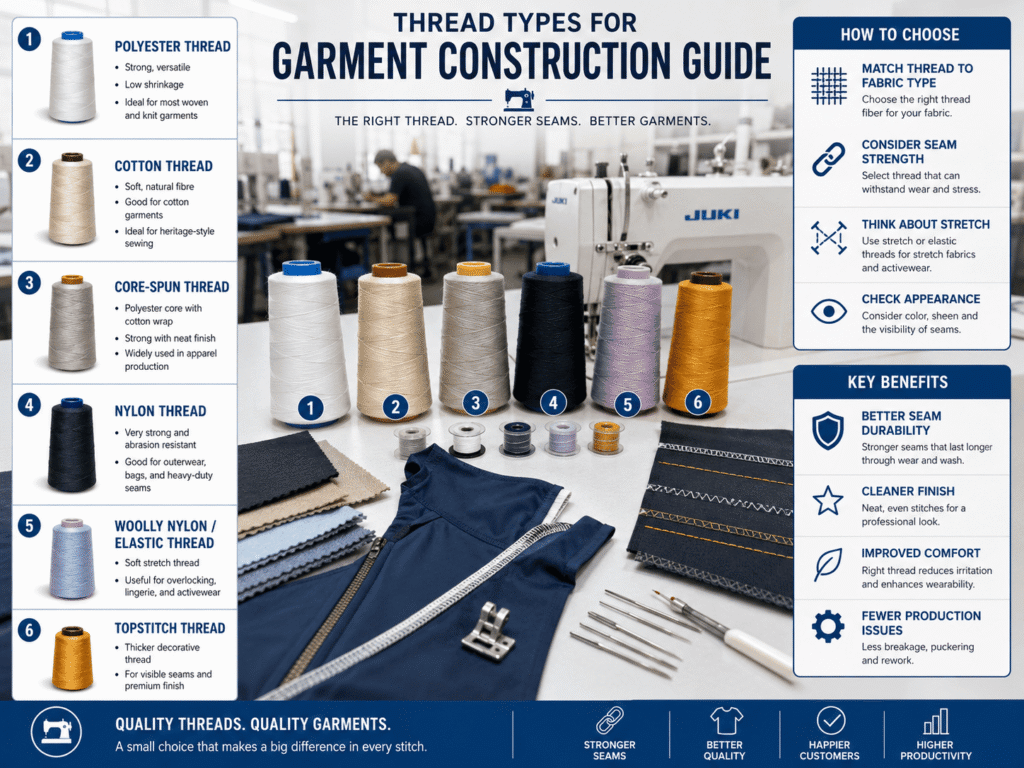
Thread Types for Garment Construction Guide

A brand once had an entire batch of activewear returned after seams split at the first proper stretch test — the fabric was fine, the stitching was fine, but the thread itself simply couldn’t stretch with the fabric. Thread is one of the cheapest line items in a garment’s cost sheet and one of the […]

Thread Types for Garment Construction Guide Read More »

Fit Sessions: Perfecting Your Garment Fit

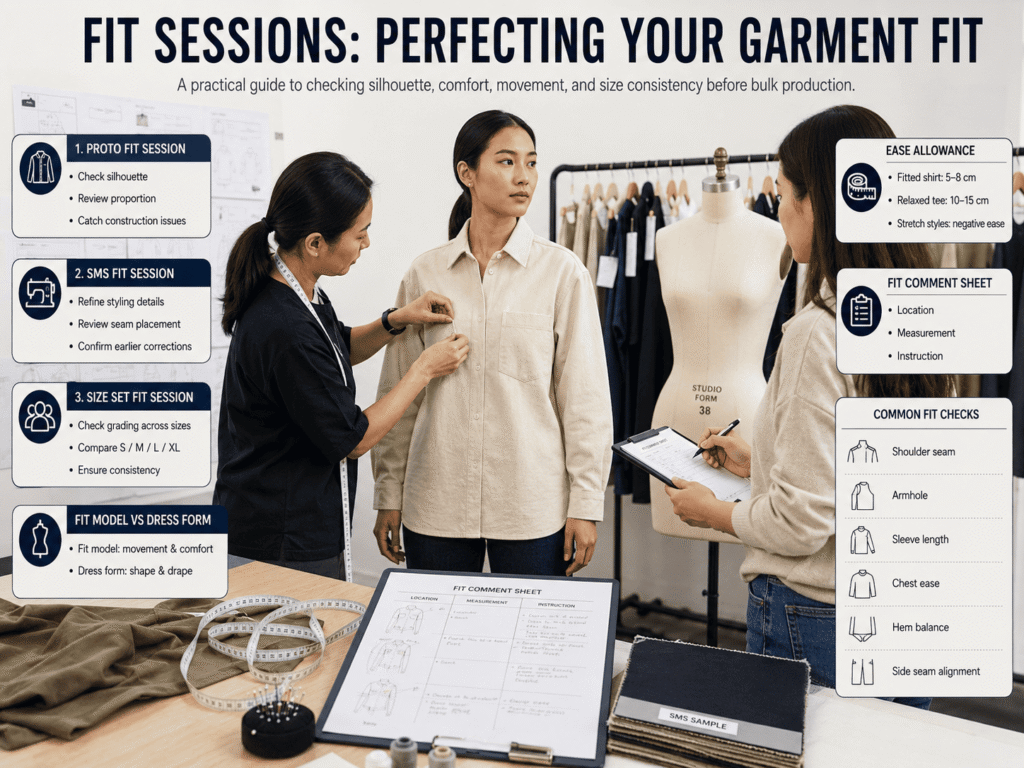
Fit Sessions: Perfecting Your Garment Fit

  Poor fit is a bigger sustainability problem than most brands realise. Garments that don’t fit properly are cited as a major reason clothing gets discarded rather than worn, according to WRAP’s research into UK clothing lifecycles. Fit sessions exist to catch that problem before bulk production, not after a customer opens the box. This

Fit Sessions: Perfecting Your Garment Fit Read More »

Factory audit checklist in action

How to Conduct a Factory Audit [Checklist] Visual Guide

Most brands treat a factory audit as a formality to get through before placing a first order — tick the box, get the report, move on to production. That’s backwards. A factory audit that only happens once, before the relationship starts, tells you nothing about whether conditions hold up under order pressure six months later.

How to Conduct a Factory Audit [Checklist] Visual Guide Read More »

Embroidery vs Screen Print vs DTG- Which Method

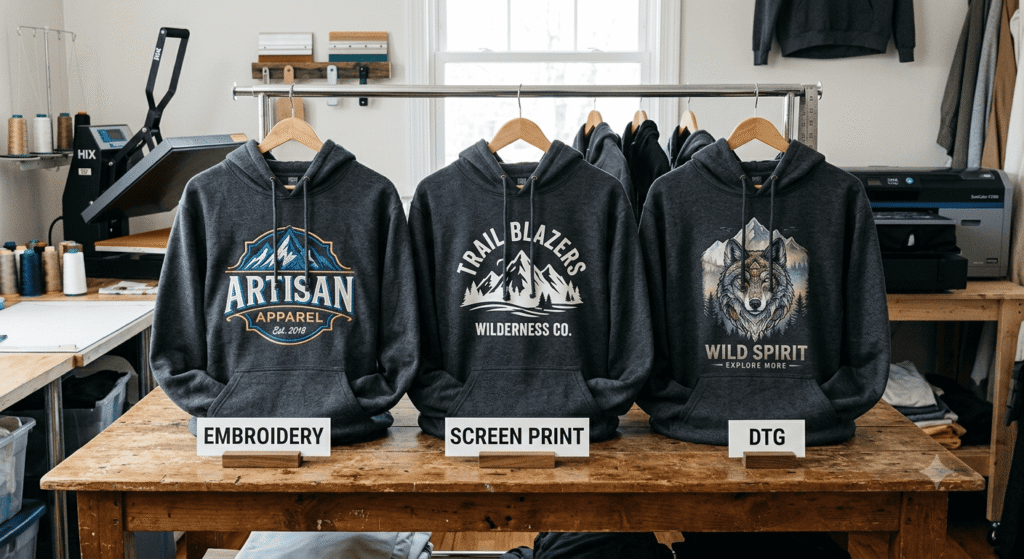
Embroidery vs Screen Print vs DTG: Which Method?

Embroidery, screen printing, and DTG dominate garment decoration for different reasons — thread stitched into fabric, ink pushed through a mesh screen, and ink jetted directly onto the surface each behave differently under wear and wash. WRAP’s clothing durability research shows that extending the average life of clothing by just nine months could reduce carbon,

Embroidery vs Screen Print vs DTG: Which Method? Read More »

Colour Matching- Pantone & Lab Dips Guide

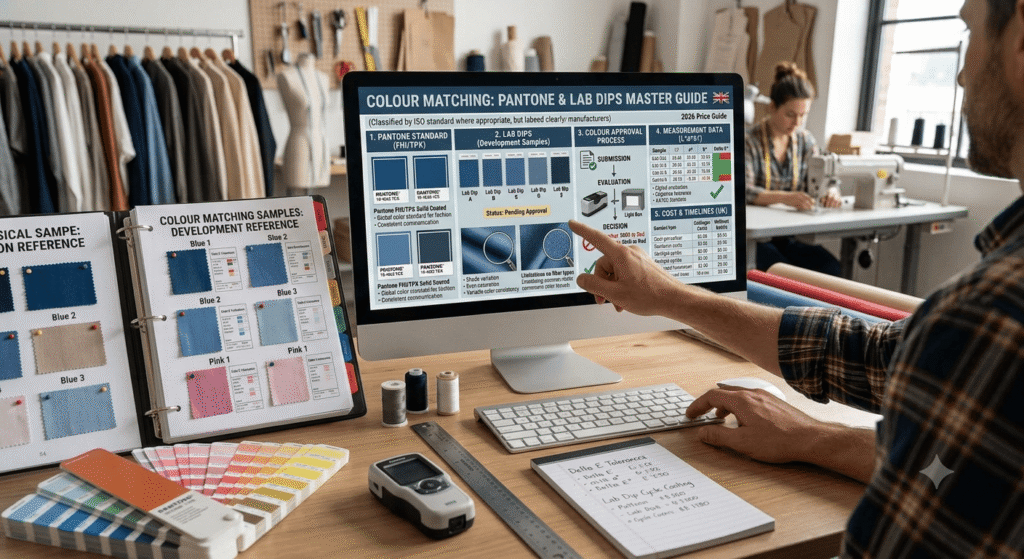
Colour Matching: Pantone & Lab Dips Guide

Approve a colour on a laptop screen, and there’s a good chance the bulk fabric won’t match it in real light. Colour matching in clothing production runs on physical standards and measured tolerances — not screen previews — and skipping that process is one of the most common reasons brands end up rejecting an entire

Colour Matching: Pantone & Lab Dips Guide Read More »

Seam Types in Manufacturing [Visual Guide]

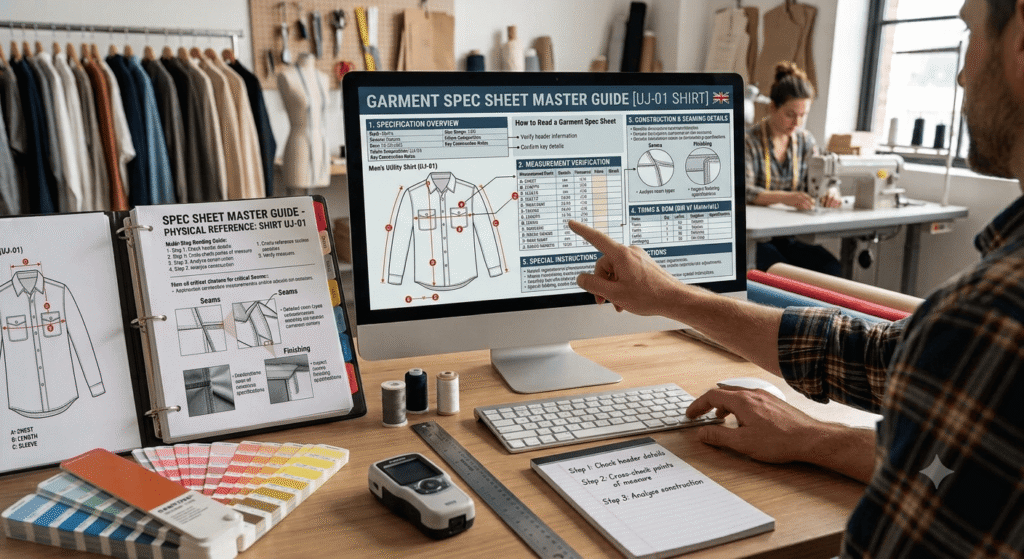
Seam Types in Manufacturing [Visual Guide]

Specify “standard seam” in a tech pack, and you’re leaving one of the most consequential construction decisions entirely up to the factory’s default. Seam type affects strength, stretch, bulk, and finish — get it wrong on activewear or outerwear, and the garment fails exactly where it’s stressed most. This guide breaks down seam types clothing

Seam Types in Manufacturing [Visual Guide] Read More »

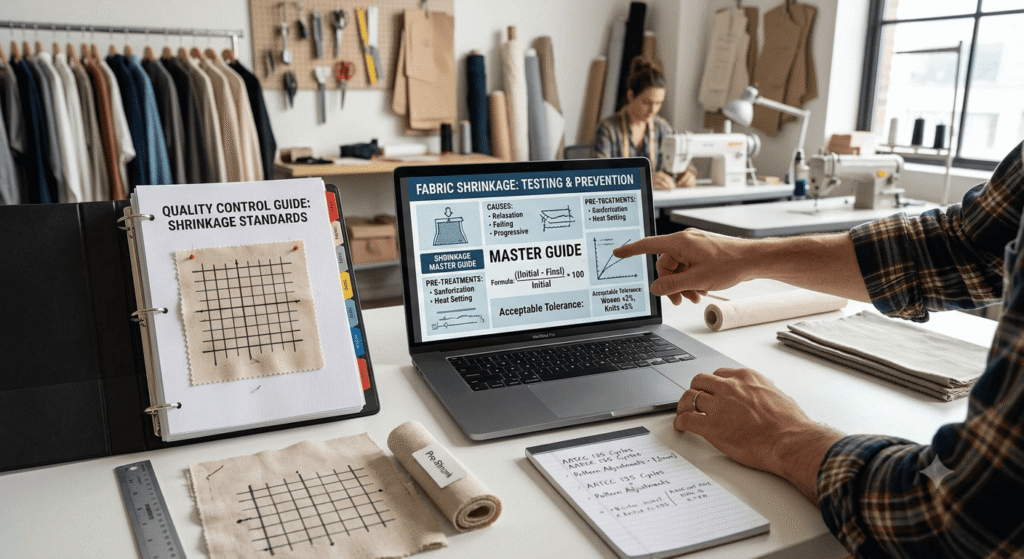
Fabric Shrinkage: Testing & Prevention

Fabric Shrinkage: Testing & Prevention

A shirt that fits perfectly on delivery and then no longer fits after the customer’s first wash isn’t a fluke — it’s a shrinkage problem that should have been caught before bulk production ever started. Fabric shrinkage is one of the most common, and most preventable, quality issues in clothing manufacturing. This guide covers fabric

Fabric Shrinkage: Testing & Prevention Read More »

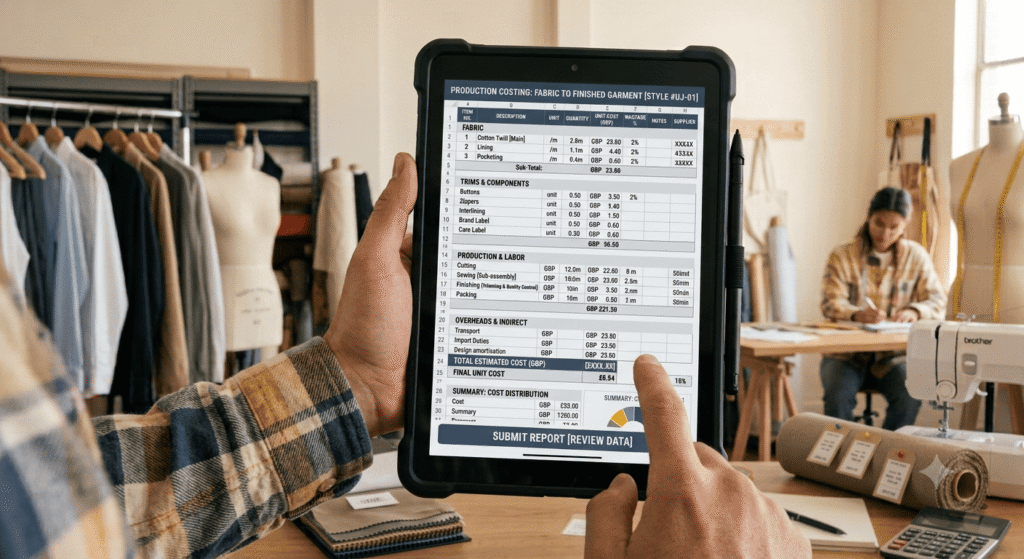
Production Costing: Fabric to Finished Garment

Production Costing: Fabric to Finished Garment (Visual guide)

Two brands can order the exact same garment, in the exact same fabric, from two different factories — and end up with a 30% difference in landed cost. The gap almost always comes down to what’s actually included in the number they were quoted, not the quality of the garment itself. This guide breaks down

Production Costing: Fabric to Finished Garment (Visual guide) Read More »

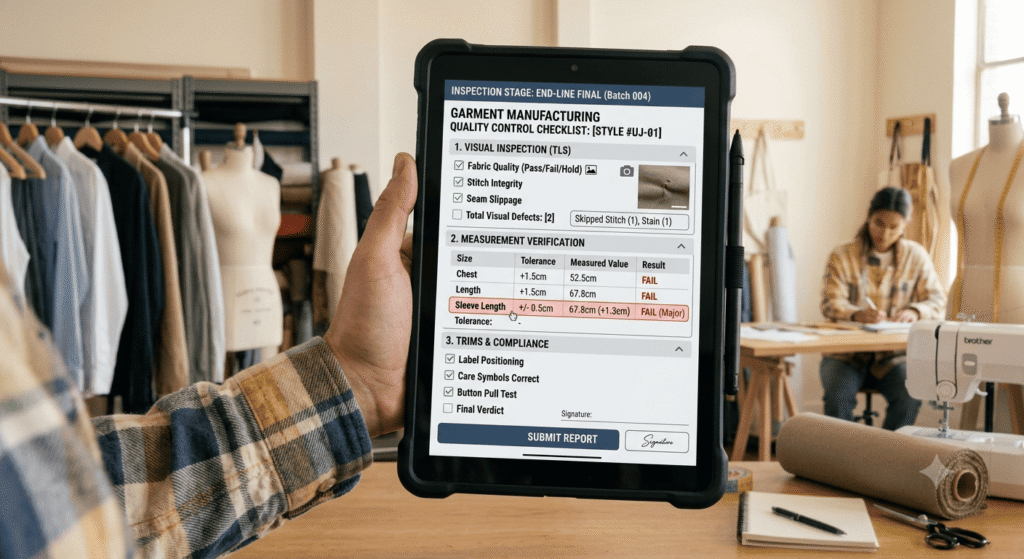
QC Checklist for Clothing Manufacturing

QC Checklist for Clothing Manufacturing

A batch of 500 garments can pass every measurement check and still fail on delivery — because nobody checked stitch density, or nobody classified a recurring defect as major instead of minor. A proper QC checklist exists precisely to stop quality control from depending on one inspector’s memory. This guide is a working QC checklist

QC Checklist for Clothing Manufacturing Read More »

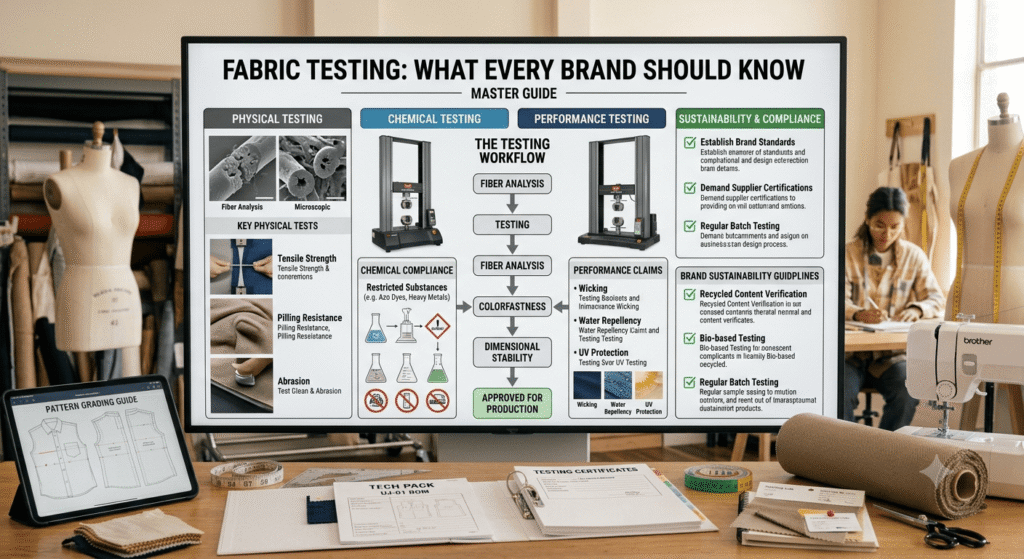
Fabric Testing: What Every Clothing Brand Should Know

Fabric Testing: What Every Brand Should Know

A fabric that looks and feels perfect in the showroom can still fail a customer’s washing machine, an allergy test, or a legal compliance check. Fabric testing exists to catch exactly that gap before bulk production — not after a customer complaint. This guide covers fabric testing clothing UK brands need to understand: which tests

Fabric Testing: What Every Brand Should Know Read More »

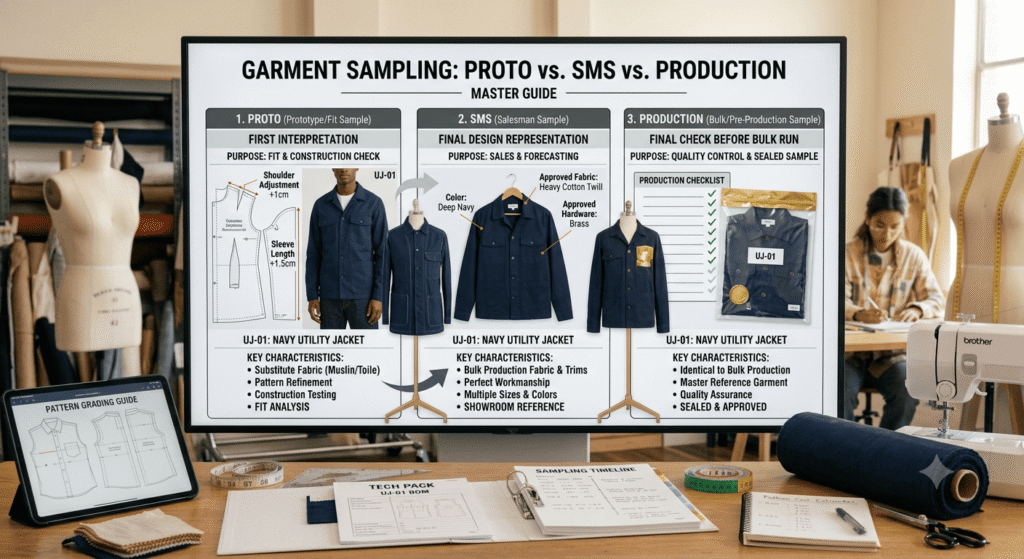
Garment Sampling: Proto vs SMS vs Production

Garment Sampling: Proto vs SMS vs Production (Infographic)

Most clothing brands lose money in one of three ways during sampling: approving too early, confusing what each sample is actually for, or skipping the one round that actually matters. Get sampling right, and bulk production runs smoothly. Get it wrong, and the same mistake repeats hundreds of times over. This guide breaks down proto

Garment Sampling: Proto vs SMS vs Production (Infographic) Read More »

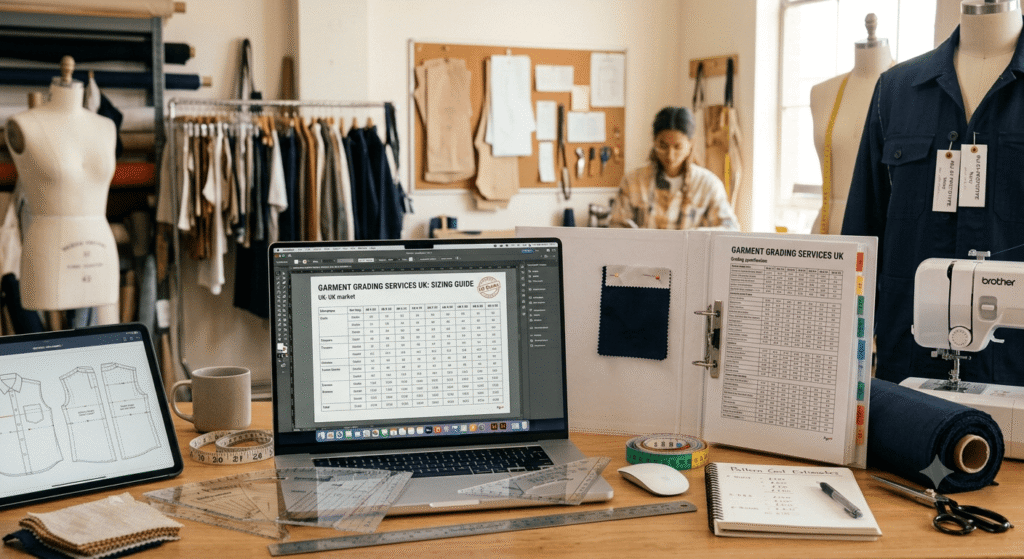
Garment Grading Services UK

Garment Grading Services UK: Sizing Guide (Visual guide)

A pattern that fits perfectly in a sample size 12 can fall apart completely once it’s scaled up to a size 20 — not because the grading was rushed, but because bodies don’t grow proportionally in every direction. This guide covers garment grading services UK brands rely on to take one approved pattern and turn

Garment Grading Services UK: Sizing Guide (Visual guide) Read More »

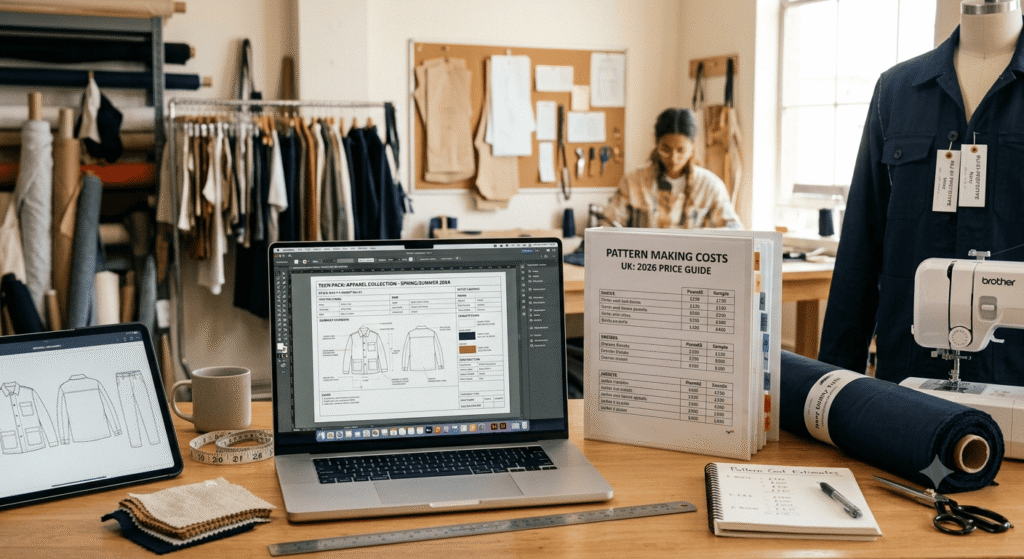
Tech Pack to Production: The Complete Clothing Manufacturing Process

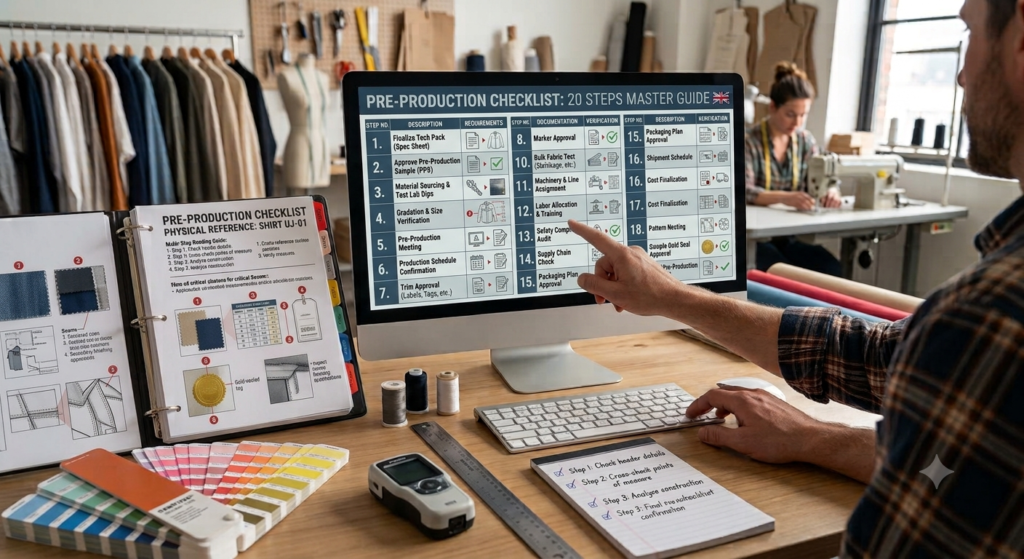
Tech Pack to Production: The Complete Clothing Manufacturing Process [2026] with Visual Guide

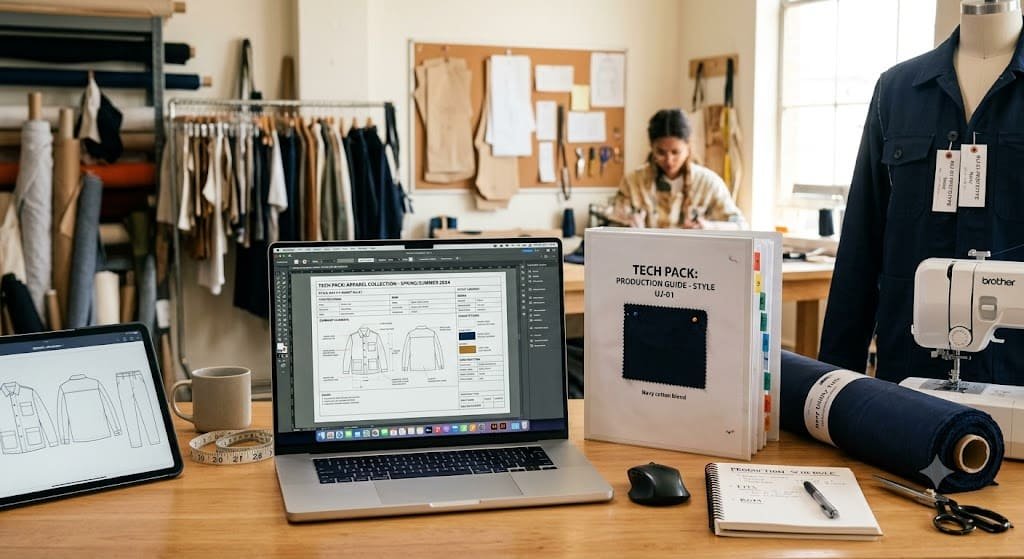
Brands come to us every week without a tech pack. They have a sketch, a reference garment, sometimes a detailed mood board. What they do not have is the one document that tells a factory exactly what to make. Without it, the first four to six weeks of the manufacturing relationship are spent filling in

Tech Pack to Production: The Complete Clothing Manufacturing Process [2026] with Visual Guide Read More »